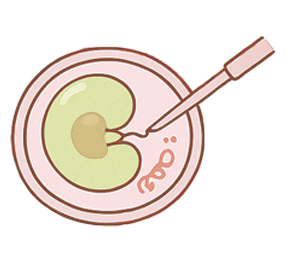
Understanding how mammalian embryos establish their developmental potential is a central theme of our research. By combining reproductive biotechnologies such as in vitro fertilization, somatic cell nuclear transfer, and micromanipulation with modern gene-editing tools including CRISPR/Cas9, we investigate the molecular and cellular mechanisms that govern early embryogenesis. Using the pig as a key model species, we explore how genetic and epigenetic regulation influences lineage specification, developmental competence, and embryo viability.
In Vitro Developmental Modeling
with Lineage-Specific Stem Cells
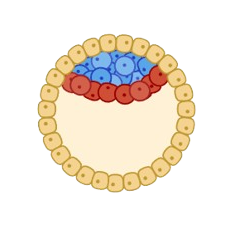
We are establishing lineage-specific stem cell lines and using them to reconstruct in vitro embryo-like structures that mimic post-implantation development. Through systematic derivation of embryonic, extraembryonic, and trophoblast stem cells from pig and other mammalian species, we aim to build synthetic embryo models that recapitulate self-organization, symmetry breaking, and tissue patterning. These models provide a powerful platform to study species-specific developmental programs and to bridge the gap between classical embryology and stem cell biology.
Pluripotency and Cellular Reprogramming Mechanisms
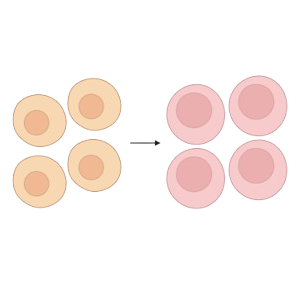
We investigate how pluripotency is established, maintained, and reprogrammed across mammalian species. By deriving and comparing embryonic stem cell lines of different developmental states—from naïve to primed pluripotency—we seek to uncover conserved and divergent regulatory networks controlling cell identity. These studies reveal how transcriptional and epigenetic circuits define the balance between plasticity and commitment, offering insight into the molecular basis of cellular reprogramming in large animals.
Stem Cell Differentiation Toward Muscle and Fat for Cultured Meat Production
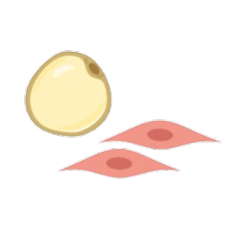
We are exploring the potential of stem cells to generate muscle and adipose lineages as a foundation for sustainable meat production. By identifying key signaling pathways and optimizing differentiation conditions, we aim to reproduce the complex architecture and nutritional properties of livestock-derived tissuesin vitro. Integrating developmental biology with applied biotechnology, this work not only contributes to the advancement of cell-based agriculture but also provides a unique window into mesodermal lineage differentiation in mammals.